Adios “Humanitarianism”…the USA is here.
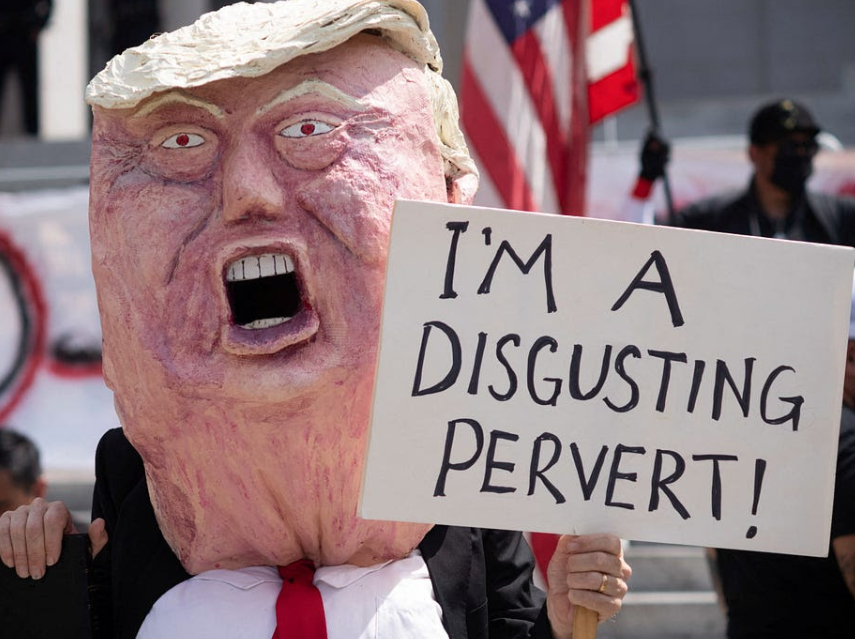
Ever see the movie, “The Ugly American?” Well, they should make a new version: “The abhorrent America” starring Donald T****. The USA under numerous presidents has shown itself to be a bully that wants its dictats adhered by every nation in the world. These leaders have corroborated, complemented and supported their capitalist profiteers wherever they have ventured. Today’s world sees the same American bullying and greed under new leadership. Same old, same old. Greedy Americans expanding their Monroe doctrine to today’s Donroe Doctrine and Cuba was caught in this American profit seeking grab. It is beyond comprehension what kind of cash grab they seek with Cuba. It may just be political dominance now, no more.
_____________________
A History of U.S. Restrictions, Blockades, and Economic Obstruction of Cuba
For more than six decades, the relationship between the United States and Cuba has been shaped by a complex web of restrictions, embargoes, and political confrontation. Central to this history is the U.S. economic embargo—often described in Cuba and much of the world as a blockade—which has profoundly affected Cuba’s economy, international trade, and everyday life. Understanding this history requires tracing the embargo’s origins, its evolution over time, and its consequences for Cuban livelihoods.
Origins: Revolution and Rupture (1959–1962)
The roots of U.S. restrictions on Cuba lie in the Cuban Revolution of 1959, which brought Fidel Castro and the 26th of July Movement to power. The new revolutionary government rapidly moved to nationalize land, banks, and industries, many of which were owned by U.S. corporations. These actions were framed by Havana as assertions of sovereignty and social justice, but Washington viewed them as expropriations aligned with communism.
United States begins restrictions on Cuba
In response, the United States began reducing Cuba’s access to the U.S. market, most notably cutting sugar imports in 1960. Cuba, heavily dependent on sugar exports and U.S. trade, felt the impact immediately. That same year, the U.S. imposed initial trade restrictions, and by February 1962 President John F. Kennedy formalized a comprehensive economic embargo, banning nearly all trade with Cuba.
Cold War Escalation and Isolation
The embargo was quickly embedded in the broader Cold War confrontation. Cuba’s alliance with the Soviet Union—and the 1962 Cuban Missile Crisis—solidified Washington’s determination to isolate the island. The goal was explicit: to pressure the Cuban government economically and politically, with the expectation that hardship would lead to regime change.
Throughout the 1960s and 1970s, the embargo limited Cuba’s access to U.S. goods, technology, and financial institutions. While Soviet aid mitigated some of the damage, the restrictions narrowed Cuba’s economic options and reinforced its dependence on the Eastern Bloc.
Codifying the Embargo: From Policy to Law
What began as an executive policy gradually became embedded in U.S. law, making it harder to dismantle. Key legislation included:
- The Trading with the Enemy Act (extended to Cuba), which provided legal authority for economic restrictions.
- The Cuban Democracy Act (Torricelli Act) of 1992, which tightened the embargo after the collapse of the Soviet Union by restricting trade with foreign subsidiaries of U.S. companies and limiting ships that docked in Cuban ports from entering U.S. ports.
- The Helms–Burton Act of 1996, which internationalized the embargo by allowing U.S. nationals to sue foreign companies “trafficking” in property nationalized after the revolution. This act effectively removed the president’s authority to fully lift the embargo without congressional approval.
These measures came during Cuba’s “Special Period,” an era of severe economic crisis marked by shortages of food, fuel, and medicine after the loss of Soviet support. The tightening of U.S. restrictions during this time intensified the hardship.
Effects on Livelihood and Daily Life
The embargo’s impact on Cuban livelihoods has been multifaceted. Restrictions on trade and finance have raised the cost of imports, limited access to advanced medical equipment and spare parts, and complicated Cuba’s participation in global markets. Even when goods are legally permitted—such as food and medicine—financial sanctions and banking restrictions have often made transactions difficult or expensive.
Cuba has argued that the embargo affects nearly every sector: agriculture, health care, transportation, and energy. The inability to easily purchase equipment or technology from U.S. companies—or from foreign companies using U.S. components—has constrained productivity and innovation. For ordinary Cubans, this has translated into chronic shortages, lower wages, and reduced economic opportunity.
International Opposition and the “Blockade” Debate
Since 1992, the United Nations General Assembly has annually voted overwhelmingly to condemn the U.S. embargo. Most countries view it as an extraterritorial policy that violates international norms by penalizing third parties for trading with Cuba.
The Cuban government and many international observers refer to the embargo as a “blockade,” arguing that its reach—especially financial sanctions and penalties on foreign banks—goes beyond a conventional trade embargo. The U.S. government rejects this characterization, maintaining that humanitarian goods are exempt and that the policy is a legitimate tool of foreign policy.
Periods of Easing and Reversal
There have been moments of limited thaw. During the Obama administration (2009–2017), the U.S. eased travel restrictions, restored diplomatic relations, and expanded remittances and trade in specific sectors. These changes led to a modest increase in tourism and private enterprise in Cuba.
However, the core embargo remained intact, and subsequent policy reversals reinstated or intensified sanctions. These shifts underscored how deeply entrenched the embargo had become in U.S. domestic politics.
Conclusion: A Long Shadow
The history of U.S. restrictions on Cuba is not a single, static policy but a layered system of laws, sanctions, and political choices spanning more than sixty years. Whatever one’s view of the Cuban government, the embargo has played a central role in shaping Cuba’s economic landscape and constraining the livelihoods of its people.
As debates continue over democracy, human rights, and sovereignty, the embargo remains one of the longest-running economic sanctions regimes in modern history—an enduring symbol of Cold War politics and American hegemony whose effects are still felt in everyday Cuban life.
______________
See -> “Time for Canada to help Cuba in crisis” TorStar, 2.14.26