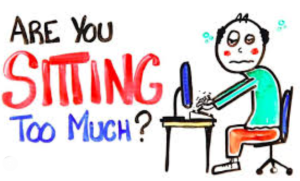
I work on the computer 4-5 a day, sitting too much. A couple of months ago I started to walk on a treadmill 40 mins a day, 5 days a week. So far, the only thing that has changed is psychological. I don’t feel as guilty as I felt before and I am proud of doing it consistantly for so long. It’s not quite a habit yet but it is close to being one.
A little bit of research uncovered a study that reinforced that what I am doing is good for my health. However, the study suggests some modifications, shorter exercise cycles with greater frequency. Here are the details of my research:
____________________
The Hidden Health Cost Too Much Sitting
The Pandemic Revelation
Do you ever close your laptop at the end of a long day and feel like you have just enough energy to crawl over to the couch to scroll on your phone or watch a show? During the pandemic, I couldn’t understand why I didn’t want to dance around the living room. Where did all my energy go?
As a journalist specializing in how tech habits change us, I decided to find out why sitting in front of a screen makes us feel so exhausted. We’ve all heard about the mental effects—but what about our physical health?
A Global Health Crisis
Looking at screens has not only reshaped our days, it’s reshaping our bodies:
- The average 19-year-old moves about as much as the average 60-year-old
- Rates of type 2 diabetes in young people have doubled over 20 years
- Three in four American adults has at least one chronic illness—many preventable
The WHO predicts that by the end of this decade, this lifestyle will lead to:
- 500 million new cases of preventable conditions (heart disease, obesity, diabetes)
- $27 billion in annual costs to governments
Typing, swiping, scrolling, sitting. This is the rhythm of our modern life.
The Research That Changed Everything
Keith Diaz, a physiologist at Columbia University Medical Center, has spent his career figuring out how little movement we need so that sitting doesn’t kill us.
His 2022 study found dramatic results:
- Just 5 minutes of gentle movement every 30 minutes slashed blood sugar and blood pressure
- Trading 30 minutes of sitting for 30 minutes of movement daily lowered risk of premature death by 18%
Working Out Isn’t Enough
Think your morning workout or standing desk has you covered? Sorry, no.
If you sit or stand for the majority of your waking hours, your health is still in jeopardy. Don’t stop working out, but you must break up those long stretches of sedentary screen time.
Testing the Theory
I joined the study. Results from two days in the lab were extraordinary:
- Day 1: Sat and worked for 8 hours straight
- Day 2: Took movement breaks every half hour
The difference:
- Glucose cut nearly in half
- Blood pressure down 5 points
- Mood significantly better
But would this work in real life?
The Body Electric Study
NPR and Columbia created a podcast and global clinical trial with 20,000 participants. They chose a movement dose:
- 5 minutes every 30 minutes
- 5 minutes every hour
- 5 minutes every 2 hours
Activities included: dancing, pacing on calls, walking the dog, taking out trash—anything to break up sitting.
The Challenge: The first few days were tough. It takes intention and rebellion to upend a world built around screens and chairs.
The Breakthroughs: People reported:
- Less pain
- More energy
- More positive outlook on life
The Results
- 80% of participants stuck with movement breaks for two solid weeks
- The more often they took breaks, the better they felt
- Going outside provided an extra boost
- Some lost stubborn pounds
- Most people actually liked the breaks
Biggest surprise: Breaks didn’t hurt productivity. People focused better and felt their work quality improved.
Why Movement Breaks Work
When we sit:
- Arteries bend at hips and knees (like a kinked vacuum hose)
- Blood pools in legs, muscles stop contracting
- Leg muscles can’t clear out fat and sugar or reduce blood pressure
- Over time, chronic conditions develop
Posture effects:
- Sitting compresses the diaphragm
- We take shallow breaths
- Less oxygen reaches our blood and brain
- Result: fatigue and loss of focus
The Screen Effect
Screens disrupt interoception—your body’s way of telling you what it needs. The more we focus on screens, the less we listen to our body’s signals. You keep scrolling past the anxiety, past the exhaustion. This leads to burnout and chronic conditions.
How to Start Making Changes
Create a mantra based on your sedentary stretches:
- Students: “I’ll take an extra lap around the quad before class instead of checking TikTok”
- Remote workers: “I will march in place on long Zoom calls to avoid the post-meeting crash”
- Parents: “I will take a lap around the soccer field so I have energy for dinnertime chaos”
- Everyone: Dance while microwaving leftovers, walk the concourse instead of sitting at the gate
A mix of these habits keeps your muscles firing and your mood steadier.
Dana’s Story
Dana, 43, works in HR and was a type 2 diabetic. Her doctor prescribed long morning walks, but her numbers weren’t changing.
After joining the study and fitting movement breaks between meetings:
- Blood pressure dropped 40 points (within weeks)
- Cholesterol went down
- Began tapering insulin
- Today: Off all meds
A Call to Action
Too much time online isn’t just bad for our mental health—it’s in our bodies. We need movement to be as much a part of our lives as screens are.
What you can do:
- Take movement breaks
- When people look at you weird, tell them why
- Get them to put down their phone and join you
Start soon, start small. Start now.
You’re alive. You’re alive.