
Comprehensive Summary: Pickering Housing Density Proposal
1. Comprehensive Summary of the Proposed Change
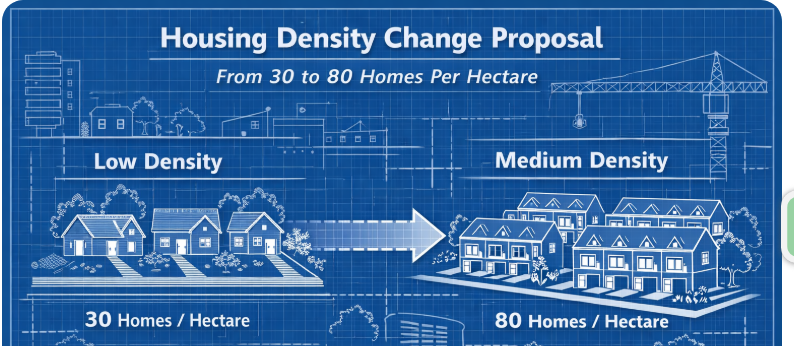
The City of Pickering is considering an Official Plan Amendment that would change the permitted residential density for a property in the Bay Ridges neighbourhood. Currently, the site is designated for low-density residential development, which allows a maximum of 30 dwelling units per net hectare. The proposed amendment would redesignate the land to a medium-density residential category, permitting between 30 and 80 dwelling units per net hectare.
The proposed change is intended to accommodate a 21-unit townhouse condominium development. The site is located near Liverpool Road and within proximity to the Pickering GO Station and major transit routes. Because of this location, the proposal aligns with broader urban planning objectives that encourage intensification near transit corridors and existing infrastructure.
To proceed, the amendment must be reviewed and approved by municipal council. The proposal reflects ongoing regional efforts to address housing supply pressures while balancing community character, infrastructure capacity, and long-term planning goals.
2. PROS of the Proposed Policy Change
Increased Housing Supply
- Allows more residential units to be built on the same parcel of land.
• Contributes to addressing housing demand in the region.
• Supports provincial and regional housing targets.
Efficient Use of Land Near Transit
- Encourages development close to the Pickering GO Station.
• Promotes transit-oriented communities.
• Reduces reliance on personal vehicles.
Greater Housing Diversity
- Introduces townhouse-style housing in an area dominated by detached homes.
• Provides alternative ownership options such as condominium townhouses.
• Appeals to different household types, including young professionals and downsizers.
3. CONS of the Proposed Policy Change
Impact on Neighbourhood Character
- May alter the existing low-density character of the area.
• Could create visual and design differences compared to surrounding homes.
• May generate concerns among long-term residents.
Infrastructure and Traffic Concerns
- Increased density may add pressure to local roads.
• Parking availability could become an issue.
• Municipal services such as water, sewage, and schools may experience added demand.
Community Opposition and Planning Debate
- Rezoning applications can generate public resistance.
• Residents may question whether the scale of development is appropriate.
• Balancing growth with stability remains a challenge for municipal planners.